10,000 Japanese Vocabulary (Part 1 of 3)
This deck contains 10,000 of the most common Japanese vocabulary words, ranked in order from beginner to advanced vocabulary. Each word comes with an example sentence and audio to help you build familiarity and recall words more easily. I created this deck in tandem with the Japanese Language Pathway on the Natural Language Journey. You can find out more about how to learn Japanese for free here.
Although I try my best to make sure there are no mistakes or strange sentences, sometimes things slip through. If you notice any mistakes, please feel free to contact me via the contact form on naturallanguagejourney.com
HOW TO USE
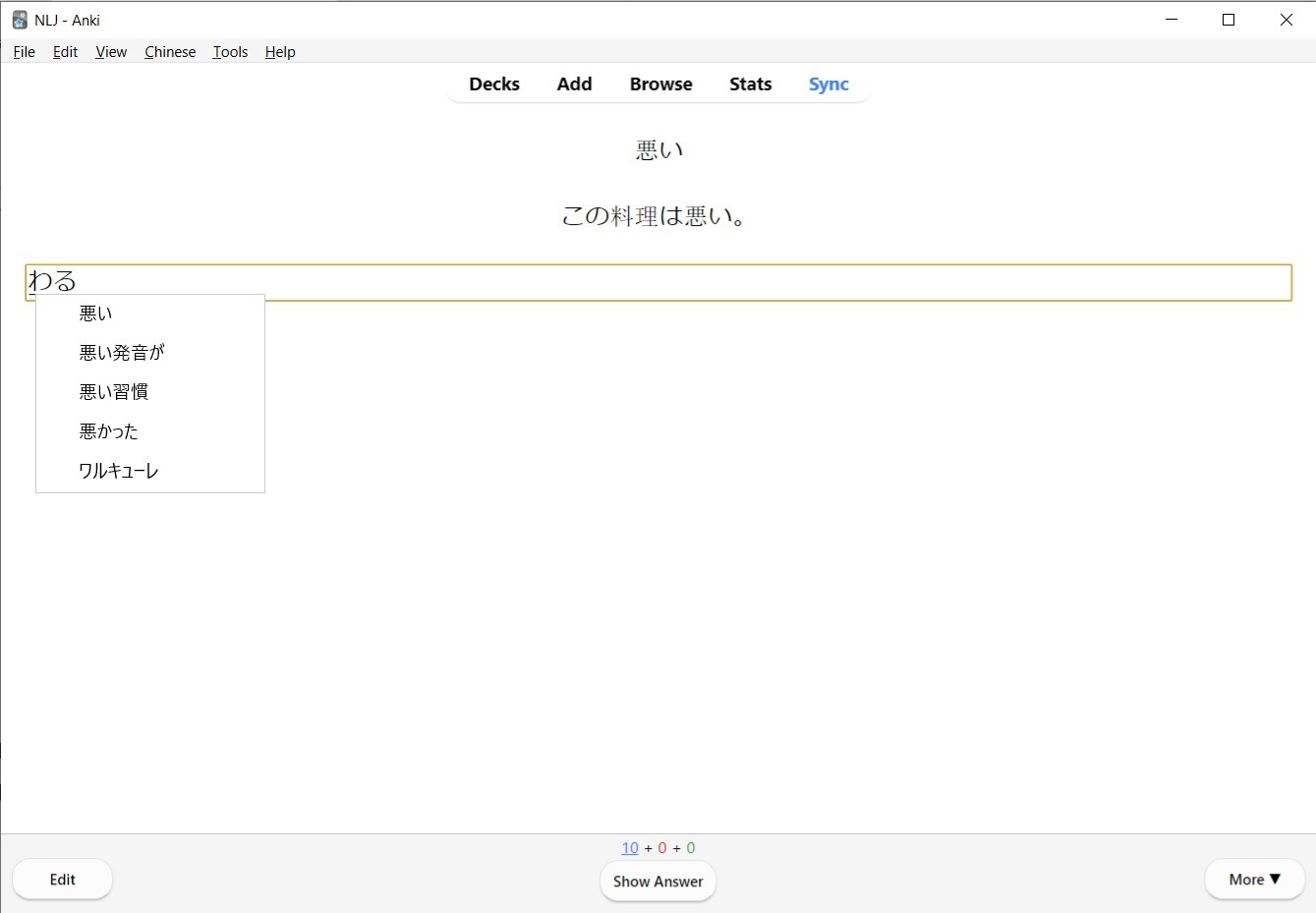
This deck contains two types of cards to help you first build recognition of a word and then recall the word. Below is an example of a recognition card. It will show you a Japanese word and an example sentence, and then ask you to type the kana reading and remember the English translation.
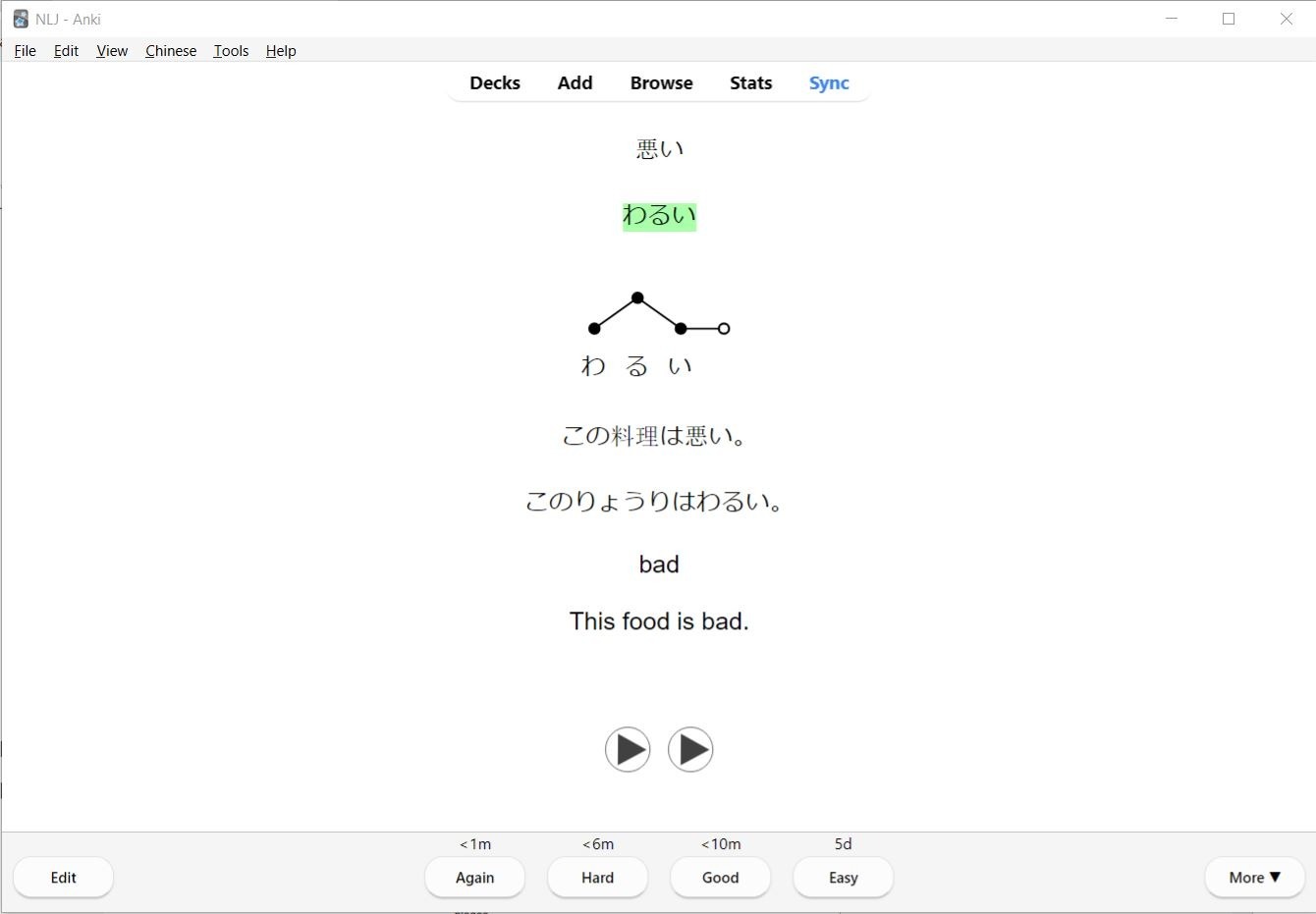
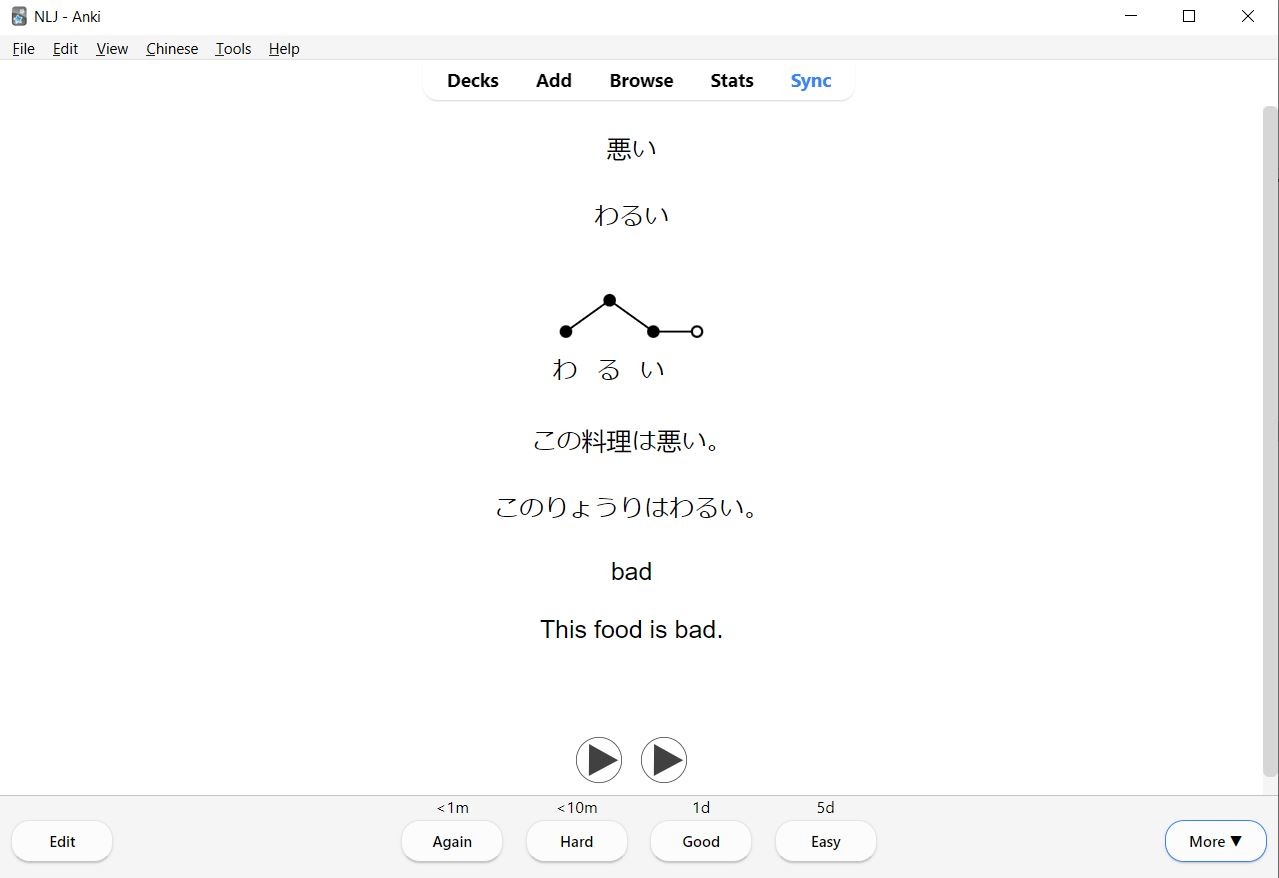
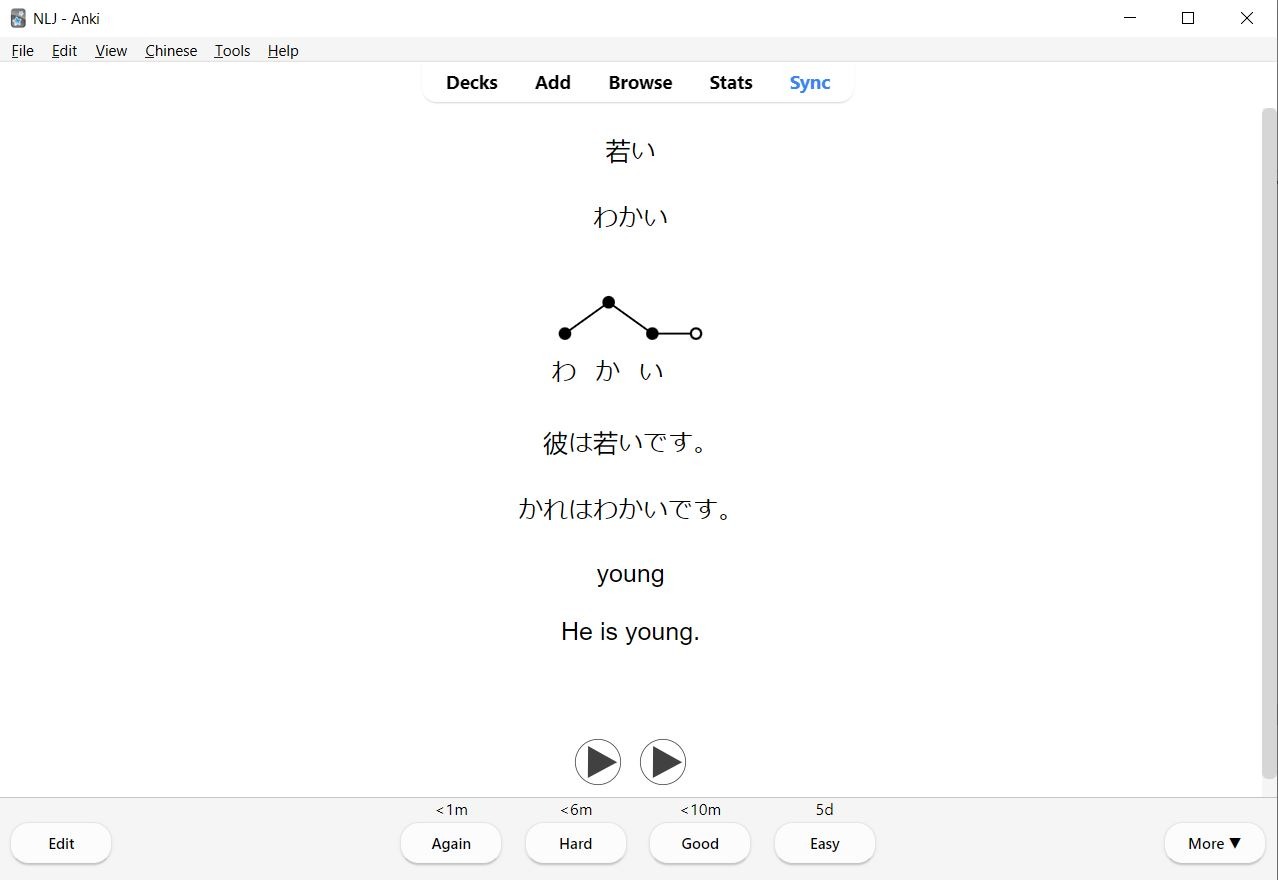
On the back side of the card, you will grade yourself based on how easily you can read and understand the word. You'll notice that there is also a pitch accent chart on the back of the card. This is for your reference if you would like to practice words with the proper pitch accent as you learn them. However, I wouldn't get too hung up on pitch accent, just put in an effort to read each word with proper pitch accent as you learn and review them, as this will make the pronunciation come more naturally later on.
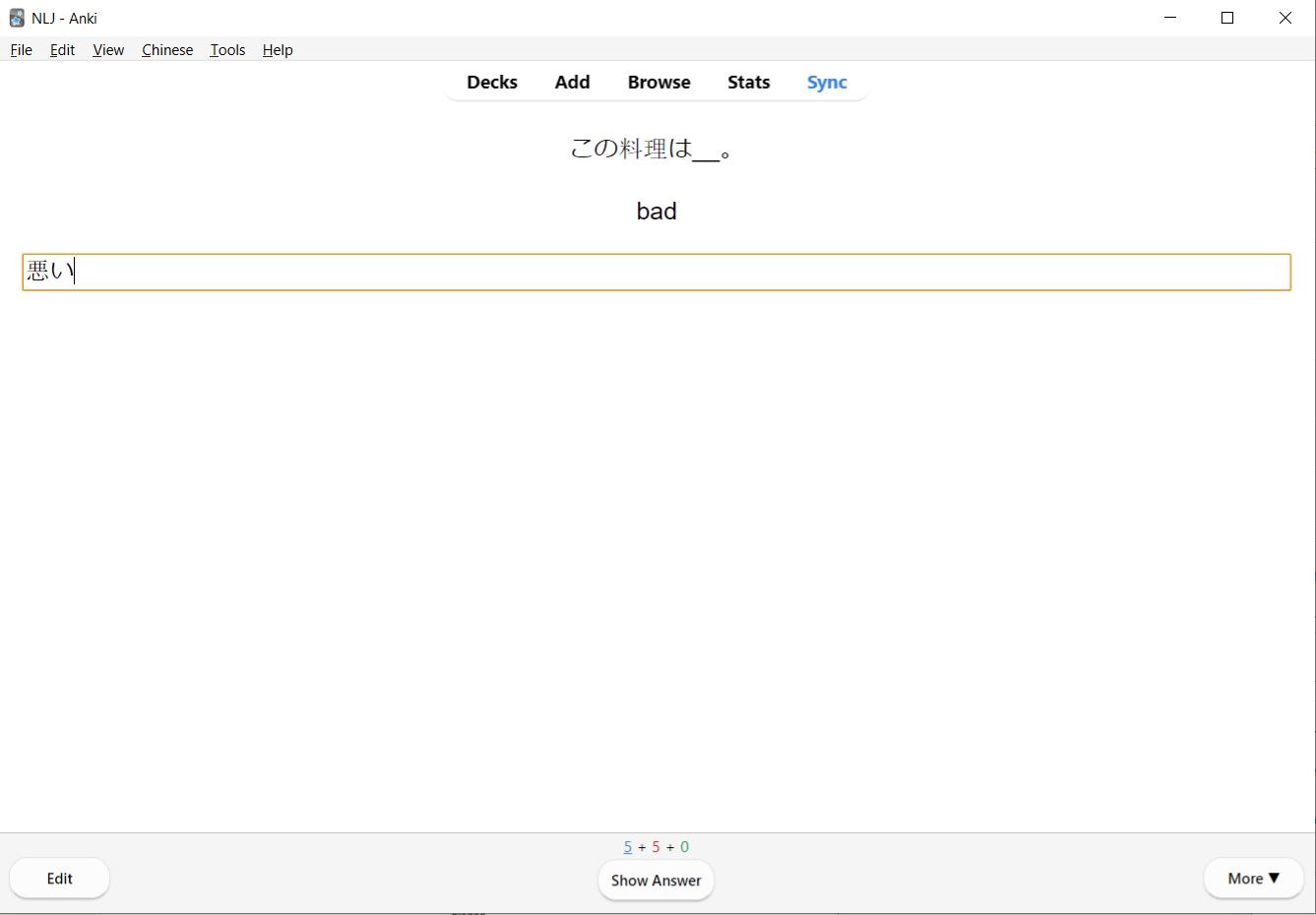
The second type of card will ask you to recall the vocabulary word. It will give you the example sentence with the word removed and the English translation, then you can type the answer in its most common form in the space provided.
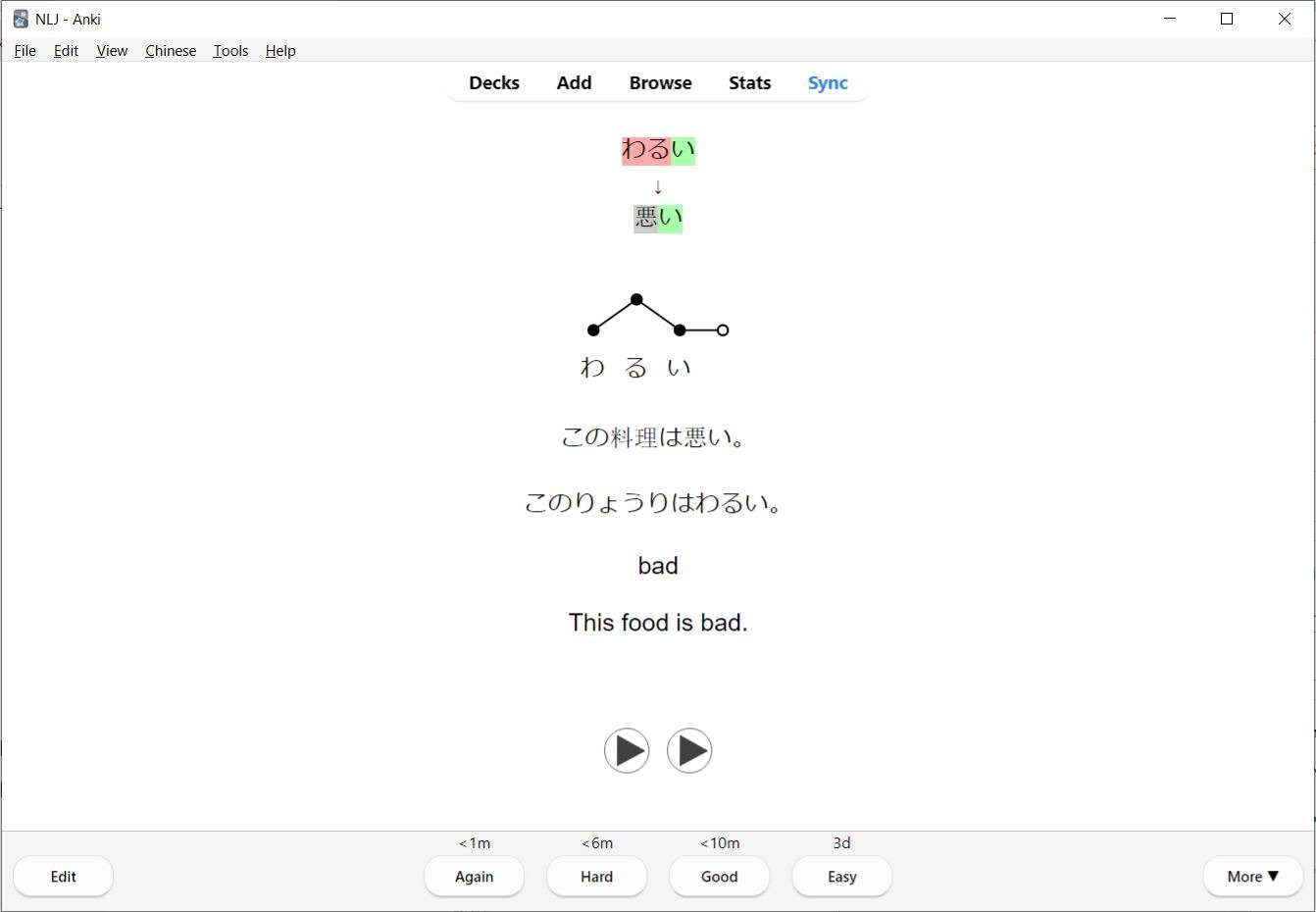
Anki will show you if there are any omitted or extra letters in your answer, but you will still need to grade yourself. Although typing the words is optional, I still highly recommend it because it will improve your recall and thoroughly test your abilities.
Although this deck does not come with images, it does have a field where you can add your own images. Adding an image is great for words you struggle to remember as it will create a visual association with the word. To add an image, click "edit" in the screen's bottom left corner, then copy and paste the image of your choice into the image field. When you're done, click "close" in the bottom right corner.
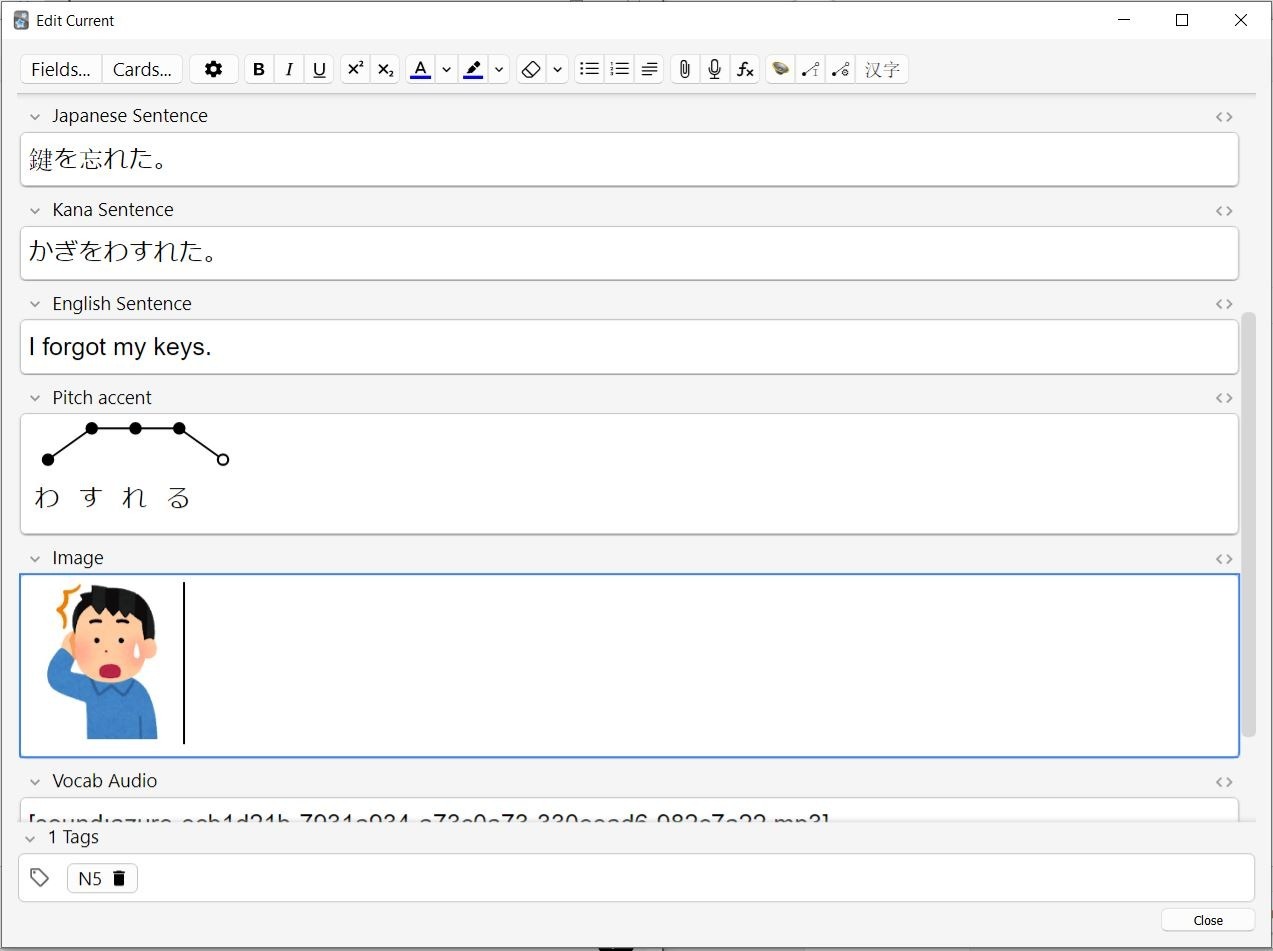
Now when you see this card again, it will have the image you added on it!
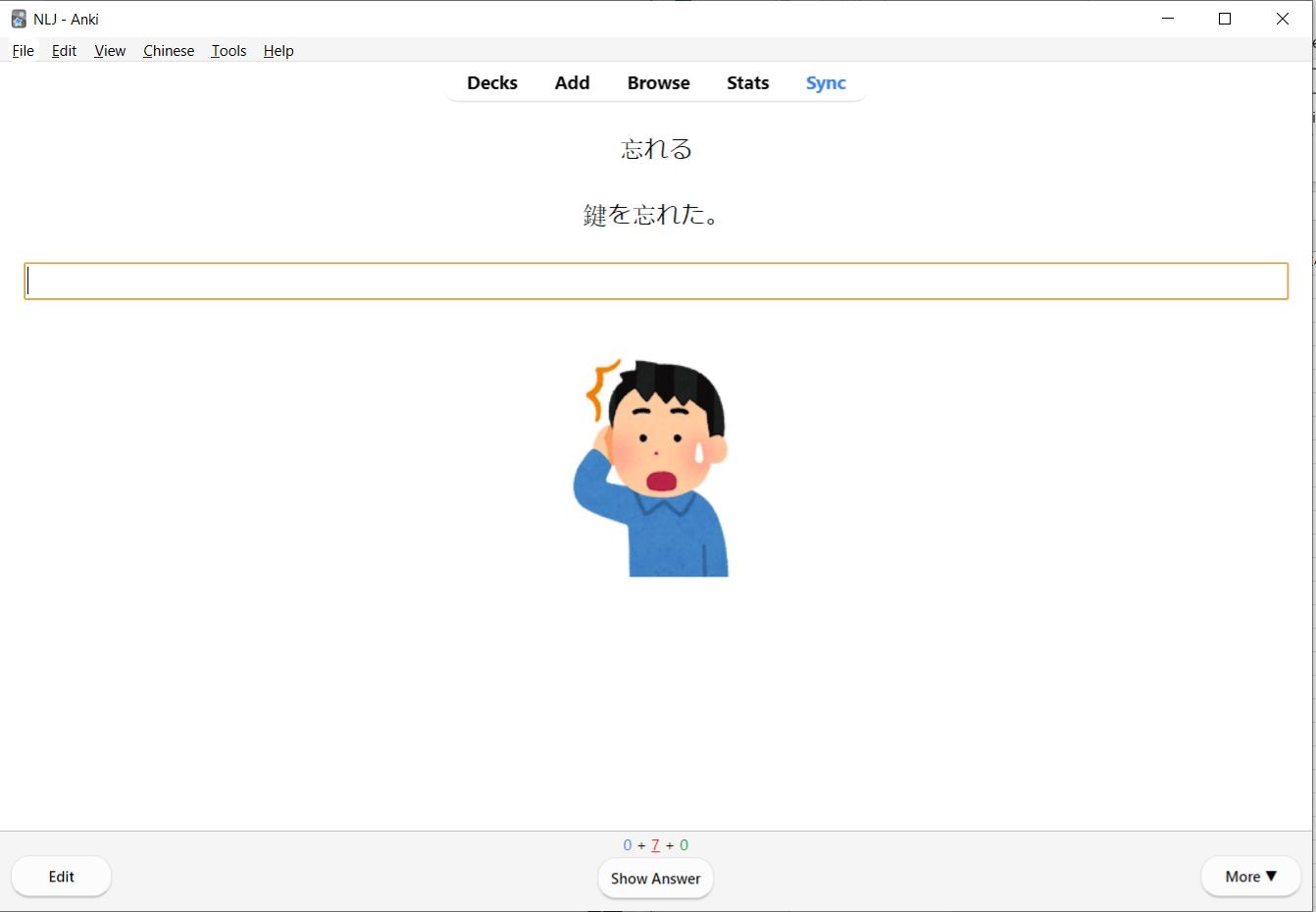
Note that as you work your way through this deck, you will see a variety of sentences with different levels of politeness and sometimes with the subject dropped. The Genki textbooks focus heavily on polite Japanese, so this may be a bit odd at first, but you will quickly learn the difference between the politeness levels. I believe it's good to learn the different politeness levels early, as most native resources will use a mix of both. For example, the sentence below is in casual Japanese since there is no ending particle (ie です). Sentences that end in the dictionary form a verb, end in "だ," or have no ending particle are casual. Sentences that end in "ーます" or "です" are polite.
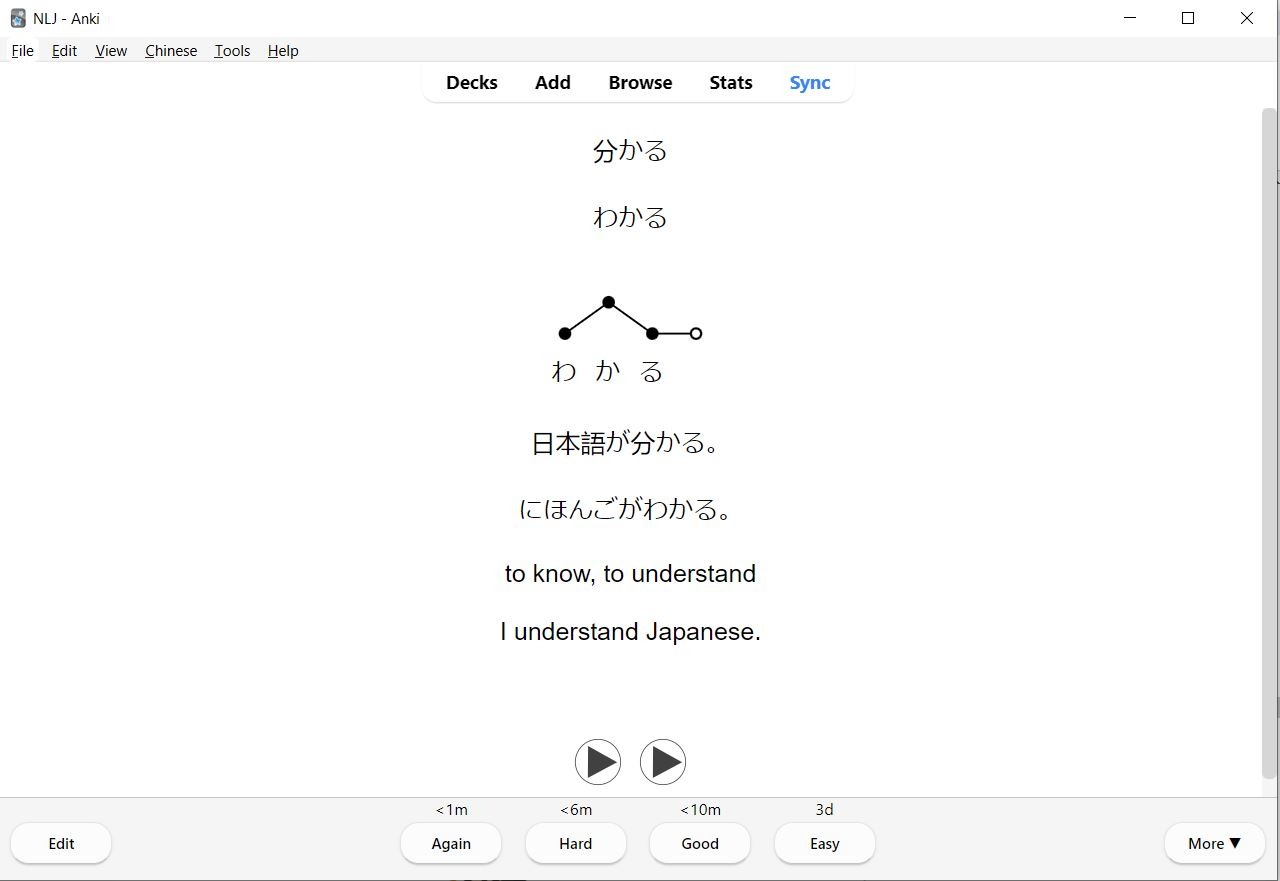
Sentences will also often have the subject dropped. Since Japanese is a highly contextual language, anything that comes before the particle "は" is usually dropped if the subject of the sentence is already clear from context. If a subject hasn't already been established, then it is assumed the speaker is talking about themselves. Take the sentence on the card below for example, "日本語がわかる" is a complete sentence in Japanese even though it wouldn't be in English. That is because in Japanese the speaker is assumed to be the subject, as seen in the translation "I understand Japanese." However, in a real conversation, it may be that the speaker is talking about someone else, but because we don't have more context we can't assume that.
Some sentences use "彼" (he) and "彼女" (she) to add context that we're talking about another person. However, be aware that these words are rarely used in actual Japanese, and they are only used here to make it easier for learners to understand and translate the sentence. In spoken Japanese, you would generally use someone's name or drop the subject altogether. For example, instead of saying "彼は若いです," I would say "たけしさんは若いです" to specify that I was talking about Takeshi being young, or if we were already talking about Takeshi, and it's clear that's who I'm talking about, I would just say "若いです." This is why you should be getting input from native sources alongside your Anki studies. Textbooks and flashcards will help you become familiar with vocabulary and grammar, but to learn actual Japanese, you need native input.
Hopefully, you enjoy this deck and find it to be a useful tool!
For a detailed guide on how to use Anki to learn Japanese, click here.
Sample Data
| Japanese | 手品 |
| Hiragana | てじな |
| English | magic |
| Image | |
| Japanese Sentence | 彼女は手品を披露してくれた。 |
| Kana Sentence | かのじょはてじなをひろうしてくれた。 |
| Cloze Sentence | 彼女は__を披露してくれた。 |
| English Sentence | She showed me a magic trick. |
| Pitch accent | てじな |
| Diagram |

 |
| Vocab Audio | |
| Sentence Audio |
| Japanese | 方 |
| Hiragana | ほう |
| English | Way, direction |
| Image | |
| Japanese Sentence | 右の方に行ってください。 |
| Kana Sentence | みぎのほうにいってください。 |
| Cloze Sentence | 右の__に行ってください。 |
| English Sentence | Please go to the right side. |
| Pitch accent | ほう |
| Diagram |
 |
| Vocab Audio | |
| Sentence Audio |
| Japanese | ビデオ |
| Hiragana | びでお |
| English | video |
| Image | |
| Japanese Sentence | 週末に映画のビデオを見た。 |
| Kana Sentence | しゅうまつにえいがのびでおをみた。 |
| Cloze Sentence | 週末に映画の__を見た。 |
| English Sentence | I watched a movie video over the weekend. |
| Pitch accent | ビデオ |
| Diagram |


 |
| Vocab Audio | |
| Sentence Audio |