Dict. Japanese Grammar+Examples w/Translation,Audio,Furigana
Language/Japanese
The DoJG deck but with audio and furigana. Alternate versions are available in the repo:
https://github.com/XaviACLM/dojg-furigana
Here's what the cards look like. The translations show on mouse hover (on desktop - on ankidroid you have to click them)
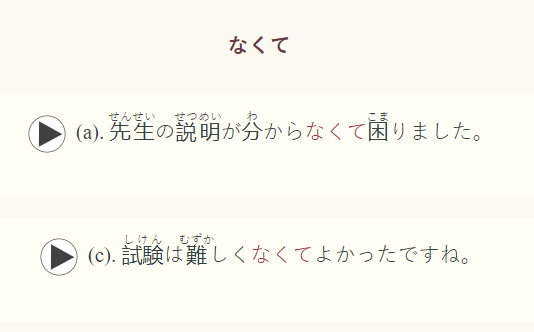
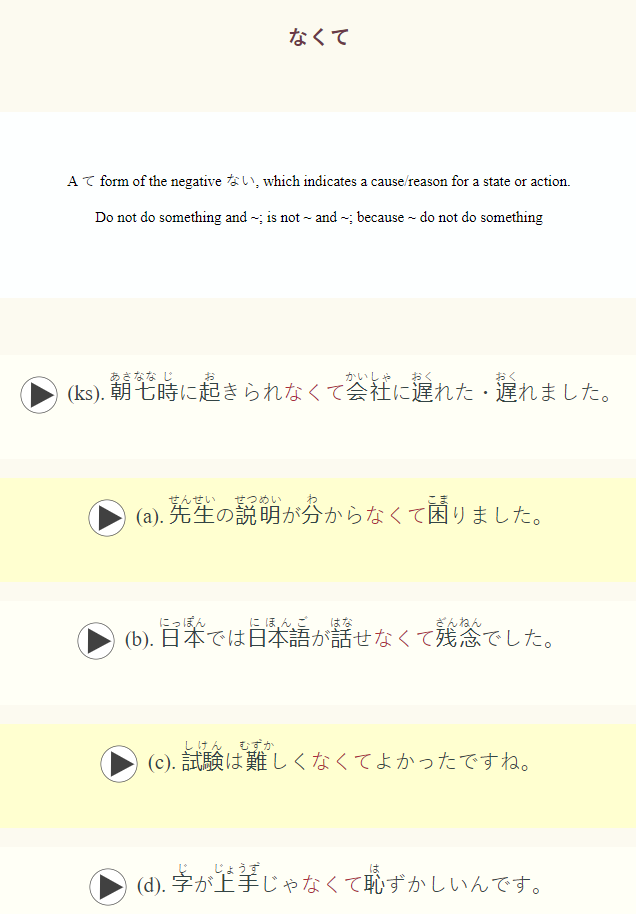
Careful with the preview below, it stops loading audio after a certain point and doesn't show the furigana properly.
Sample Data
| grammatical concept | らしい |
| usage | An auxiliary adjective which indicates that the preceding sentence is the speaker’s conjecture based on what he has heard, read or seen. |
| equivalent | Seem; look like; apparently; I heard |
| online | online reference |
| volume | Basic |
| volume tag | ㊦ |
| volume jp | 基本 |
| page | 373 |
| close | (ks). 松田まつださんはアメリカへ行いく○○です。 |
| expression_jp | (ks). 松田まつださんはアメリカへ行いくらしい・らしいです。 |
| expression_en | It seems that Mr. Matsuda is going to America. |
| example 1_jp | (a). 杉本すぎもとさんはもう帰かえったらしいです。 |
| example 1_en | Mr. Sugimoto seems to have gone home already. |
| example 2_jp | (b). あの学校がっこうの入学にゅうがく試験しけんは難むずかしいらしい。 |
| example 2_en | That school's entrance exam seems difficult. |
| example 3_jp | (c). この辺あたりはとても静しずからしいです。 |
| example 3_en | This neighbourhood seems very quiet. |
| example 4_jp | (d). その話はなしは本当ほんとうらしい。 |
| example 4_en | That story seems true. |
| example 5_jp | (e). ここは学校がっこうらしい。 |
| example 5_en | This place seems to be a school. |
| example 6_jp | |
| example 6_en | |
| example 7_jp | |
| example 7_en | |
| example 8_jp | |
| example 8_en | |
| example 9_jp | |
| example 9_en | |
| example 10_jp | |
| example 10_en | |
| example 11_jp | |
| example 11_en | |
| example 12_jp | |
| example 12_en | |
| example 13_jp | |
| example 13_en | |
| example 14_jp | |
| example 14_en | |
| example 15_jp | |
| example 15_en | |
| notes |
 |
| textnotes | 1. らしい is generally used when the speaker makes a conjecture based on some information which he has heard, read or seen. What he has heard is especially important. Unlike そうだ2, which expresses a simple guess based on what the speaker sees, らしい is used when the conjecture is based on more reliable information. (⇨ そうだ2) (For a comprehensive comparison of conjecture expressions, see (⇨ ようだ, Related Expressions.) 2. If there has been relatively little conjecture in the speaker's mind, らしい is almost the same as the hearsay expression そうだ1. (⇨ そうだ1) 3. Negative conjecture is expressed by a negative predicate and らしい, as in (1). (1) a. 田口さんはパーティーに行かないらしい。 It seems that Mr. Taguchi won't go to the party. b. メアリーはビルが好きじゃないらしい。 It seems that Mary doesn't like Bill. 4. Another use of らしい is as follows: (2) 大木さんは男らしい。 Mr. Oki is manly. Here, らしい means likeness. That is, "XはYらしい" means that X is like the ideal model of Y. (Of course, (2) can also mean "It seems that Oki is a man.") 5. Since らしい is an い type adjective, it can also precede nouns, as in (3). (3) 私は男らしい人が好きだ。 I like a manly man. The negative version of (2) is (4). (4) 大木さんは男らしくない。 Mr. Oki is not manly. If 大木さんは男(だ) is negated, the meaning changes. (5) 大木さんは男じやないらしい。 It seems that Oki is not a man. |
| formation | (i) {V/Adjective い} informal らしい {話す /話した} らしい It seems that someone (will) talk/talked {高い /高かった} らしい It seems that something is/was expensive (ii) {Adjective な stem/ Noun} {Ø/だった} らしい {静か /静かだった} らしい It seems that something is/was quiet {先生 /先生だった} らしい It seemst aht someone is/was a teacher |
| part of speech | Auxiliary Adjective (い) |
| related expression | 【Related Expression: ようだ (だろう; そうだ2)】 |
| antonym expression |
| grammatical concept | ~やら~やら |
| usage | A structure to present things, events, actions, etc., as examples, reasons or possibilities. |
| equivalent | X and Y; things like X and Y; X, Y and so on; whether X or Y; whether X or not |
| online | online reference |
| volume | Advanced |
| volume tag | ㊤ |
| volume jp | 上級編 |
| page | 720 |
| close | (ksa). 私わたしは会議かいぎ○○講習こうしゅう会かい○○でこのところ出張しゅっちょうが続つづいている。 |
| expression_jp | (ksa). 私わたしは会議かいぎやら講習こうしゅう会かいやらでこのところ出張しゅっちょうが続つづいている。 |
| expression_en | I have been traveling for business a lot these days to conferences, workshops, etc. |
| example 1_jp | (ksb). みんなに自分じぶんの写真しゃしんをほめられて嬉うれしいやら恥はずかしいやら(で)変へんな気持きもちでした。 |
| example 1_en | When people praised the picture of me I felt strange, both happy and shy. |
| example 2_jp | (ksc). 今日きょうは、上司じょうしに叱しかられるやら財布さいふを落おとすやら(で)さんざんな一いち日にちだった。 |
| example 2_en | I got told off by my boss; I lost my wallet—it's been a horrible day today. |
| example 3_jp | (ksd). 久子ひさこは来くるやらこないやら分わからないから、もう行いこう。 |
| example 3_en | We can't tell whether Hisako will come or not, so let's just go. |
| example 4_jp | (kse). 美術びじゅつ品ひんのことは何なにも知しらないので、この壷つぼが安やすいのやら高たかいのやら全然ぜんぜん見当けんとうがつかない。 |
| example 4_en | Because I know nothing about art objects, I have no idea whether this pot is cheap or expensive. |
| example 5_jp | (a). 着替きがえやらお土産みやげやらでスーツケースはもういっぱいになってしまった。 |
| example 5_en | My suitcase is full now with a change of clothes and souvenirs and other things. |
| example 6_jp | (b). 趣味しゅみのことやら家族かぞくのことやらを時々ときどきブログに書かいている。 |
| example 6_en | I write about my hobbies and my family in my blog from time to time. |
| example 7_jp | (c). 音おとを立たててスープを飲のむやら口くちにものを入いれたまま話はなすやら、直樹なおきのテーブルマナーはひどかった。 |
| example 7_en | Naoki did things like slurping his soup and talking with food in his mouth—his table manners were horrible. |
| example 8_jp | (d). アンディと楽たのしそうにおしゃべりしている陽子ようしが憎にくらしいやらねたましいやらで、人ひとと話はなしていても上うわの空そらだった。 |
| example 8_en | My mind was somewhere else when I was talking with people because I was mad at and jealous of Yoko, whom I saw talking happily with Andy. |
| example 9_jp | (e). 彼女かのじょは日本語にほんごを話はなすそうだが、まだ話はなすのを聞きいたことがないので、上手じょうずやら下手へたやら全まったく見当けんとうがつかない。 |
| example 9_en | I heard that she speaks Japanese, but because I haven't heard her speak yet, I have no idea whether she's good or bad at it. |
| example 10_jp | (f). この仕事しごとは自分じぶんにできるやらできないやら、やってみなければ分わからない。 |
| example 10_en | I can't tell if l can do this job unless I try. |
| example 11_jp | (g). 彼かれはアメリカ生うまれの生粋きっすいのアメリカ人じんだが、日本人にっぽんじんなのやらアメリカ人じんなのやら分わからないくらい、考かんがえ方かたが日本人にっぽんじん的てきだ。 |
| example 11_en | He is a genuine born-in-the-USA American, but his ways of thinking are so much like those of Japanese people that we (almost) cannot tell whether he is a Japanese or an American. (literally: his ways of thinking are like those of Japanese people to the extent that we cannot tell whether he is a Japanese or an American.) |
| example 12_jp | (h). 貸かしてもらえるのやらもらえないのやら分わからないお金かねを当あてにしているのはよくない。 |
| example 12_en | It's not good to count on the money before you know if they will lend it to you or not. |
| example 13_jp | |
| example 13_en | |
| example 14_jp | |
| example 14_en | |
| example 15_jp | |
| example 15_en | |
| notes |
 |
| textnotes | |
| formation | (i) XやらYやらV1informal nonpastやらV2informal nonpastやら笑われるやら馬鹿にされるやらSomeone was laughed at and insulted, among other things今日帰るやら明日帰るやらWhether someone will come home today or tomorrowAdjectiveい1informal nonpastやらAdjectiveい2informal nonpastやら悲しいやら悔しいやら(I felt) sad and frustratedいいやら悪いやらWhether something is good or badAdjectiveな1stemやらAdjectiveな2stemやら上手やら下手やらWhether someone is good or poor at somethingNoun1やらNoun2やらクッキーやらチョコレートやらCookies, chocolates, and so on本物やら偽物やらReal things and imitations; whether something is real or an imitation(ii) V1informal(affirmative) やらV2informal (negative) やらWhere V1=V2行くやら行かないやらWhether someone will go or not行ったやら行かなかったやらWhether someone went or not(iii) XのやらYのやらV1informalのやらV2informalのやら行くのやら留まるのやらWhether someone will go or stayAdjectiveい1 informalのやらAdjectiveい2 informalのやら新しいのやら古いのやらWhether something is new or oldAdjectiveな1stem{な/だった}のやらAdjectiveな2stem{な/だった}のやら上手なのやら下手なのやらWhere someone is good or poor at somethingNoun1{な/だった} のやらNoun2{な/だった} のやら日本人なのやらアメリカ人なのやらWhether someone is a Japanese or an American |
| part of speech | Structure |
| related expression | 【Related Expression: や~や; とか~とか; たり~たり; か~か; わ~わ】 |
| antonym expression |
| grammatical concept | みる |
| usage | Do something to see what it’s like or what will happen. |
| equivalent | Do something and see; try to do something |
| online | online reference |
| volume | Basic |
| volume tag | ㊦ |
| volume jp | 基本 |
| page | 246 |
| close | (ks). 私わたしは日本にっぽんの小説しょうせつを読よんで○○。 |
| expression_jp | (ks). 私わたしは日本にっぽんの小説しょうせつを読よんでみる・みます。 |
| expression_en | I will read Japanese novels (to see what they are like). |
| example 1_jp | (a). 面白おもしろそうなコンサートだったので行おこなってみました。 |
| example 1_en | Since it seemed interesting, I went to the concert (to see what it was like). |
| example 2_jp | (b). ここの刺身さしみは美味おいしいですよ。食たべてみますか。 |
| example 2_en | Sashimi here is good. Will you try it? |
| example 3_jp | |
| example 3_en | |
| example 4_jp | |
| example 4_en | |
| example 5_jp | |
| example 5_en | |
| example 6_jp | |
| example 6_en | |
| example 7_jp | |
| example 7_en | |
| example 8_jp | |
| example 8_en | |
| example 9_jp | |
| example 9_en | |
| example 10_jp | |
| example 10_en | |
| example 11_jp | |
| example 11_en | |
| example 12_jp | |
| example 12_en | |
| example 13_jp | |
| example 13_en | |
| example 14_jp | |
| example 14_en | |
| example 15_jp | |
| example 15_en | |
| notes |
 |
| textnotes | みる is used as an auxiliary verb with Verbて meaning 'make an attempt at doing something to see what it is like or what will happen'. 【Related Expression】 A similar expression, ようとする, means simply 'try to do something'. When these two expressions are used in the past tense, however, their meanings are not the same. For example, [1a] means that Mr. Brown did put on Tom's undershirt, whereas [1b] means that Mr. Brown tried to put it on, with the implication that he couldn't or didn't actually do it. [1] a. ブラウンさんはトムのシャツを蒼てみた。 Mr. Brown tried Tom's undershirt on. b. ブラウンさんはトムのシャツを着ようとした。 Mr. Brown tried to put Tom's undershirt on. |
| formation | Vて みる 話してみる Try to talk 食べてみる Try to eat |
| part of speech | Auxiliary Verb (Group 2) |
| related expression | 【Related Expression: ようとする】 |
| antonym expression |